RETRODESIS® Nail is an intramedullary locking nail system that can provide stabilization in all planes because of its wedged design in its distal.
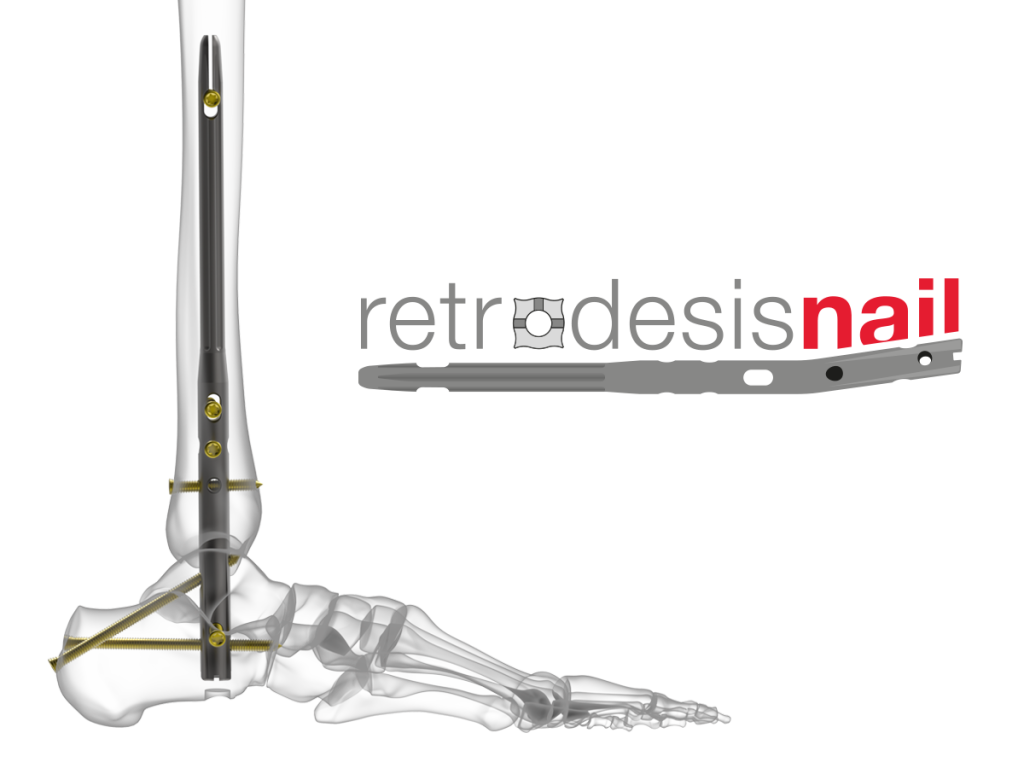
Retrodesis® Nail



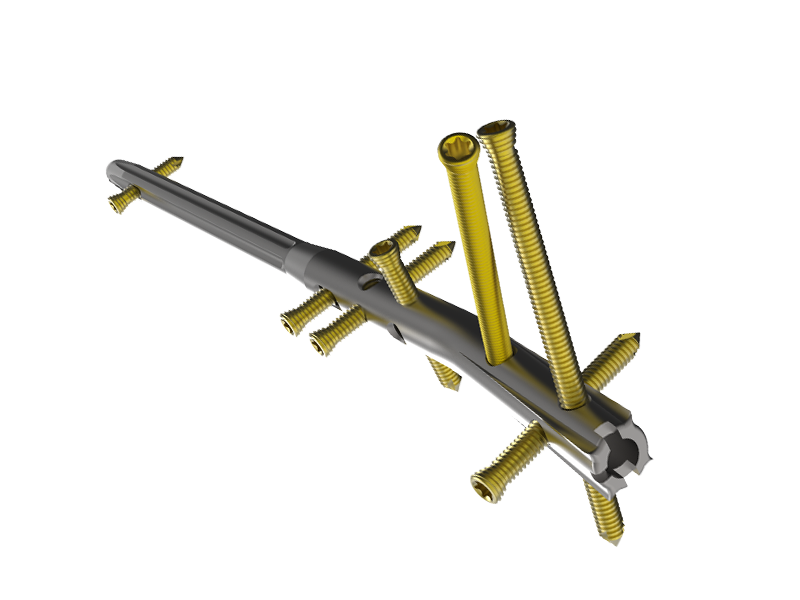
threaded distal hole design and wedge design that increases stability
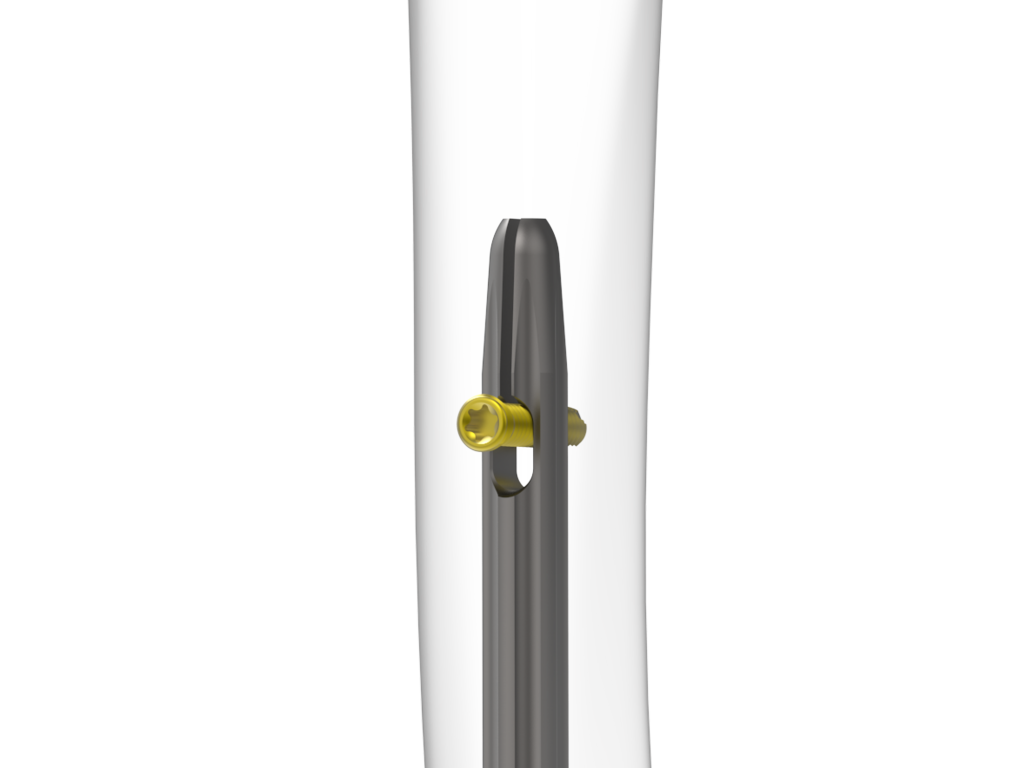
Possibility of anterior-posterior and medial-lateral locking in the proximal part and proximal slot design
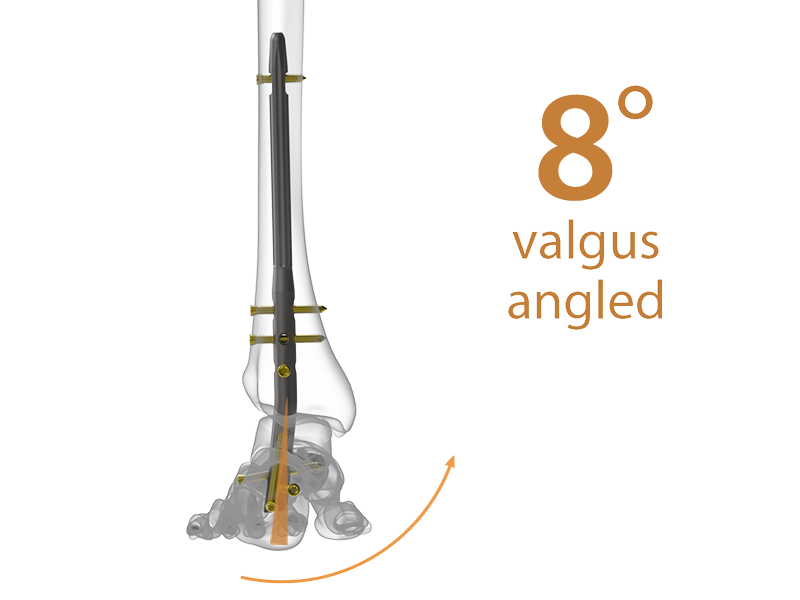
8° valgus angled solid nail
Properties
- The RETRODESIS® Nail is applied intramedullary with the retrograde method.
- The nail has a 8° valgus angulation at 56 mm proximal in accordance with the physiological valgus of the hindfoot.
- In order to ensure the correct placement of the nail in the calcaneus-talus and tibia, the entrance preparations are made over the guide wire. However, the nail was produced in a solid structure without cannula to prevent implant breakage when subjected to intense axial load.
- The tibial side of the nail is designed in a longitudinal grooved structure (LC-Low Contact) so that the non-cannula structure of the nail does not create excessive rigidity in the contact areas with the tibial cortex.
- There are 4 wing-shaped projections on the distal of the nail, decreasing from the calcaneus to the talus. Wings (from calcaneus to talus) have a triangular pyramid structure below the base. These blades both provide rotational stability distally and compress the calcaneus proximally during insertion.
- Shaft locking; In the shaft part of the nail, there are a total of 3 locking screws, one from posterior to anterior (dynamic slot), one from medial to lateral (threaded static hole), one from posterior to anterior (threaded static hole). With the locking of the screws to the nail, it is aimed to increase the screw retention strength by acting as a block with the nails, especially in osteoporotic bones.
- Distal locking: In the distal part of the nail, there are a total of 3 locking screws, one from posterior to anterior (from calcaneus – cuboide), one from posteroinferior to anterosuperior (from calcaneus to talus), and one from lateral to medial (from sustentaculum tali). All three distal locking screws are locked into the grooves drilled in the nail. With the locking of the screws to the nail, it is aimed to increase the screw retention strength by acting as a block with the nails, especially in osteoporotic bones.
- There is a proximal slot in the nail that prevents the stress reaction in the proximal tibia.
Indications
- Degenerative and rheumatoid arthritis
- Charcot neuroarthropathy
- Rigid and degenerative ankle and hindfoot deformities
- Advanced instability of the ankle and hindfoot
- Defect pseudoarthrosis of the distal tibia
- Failed total ankle arthroplasty or revision of arthrodesis
- Geriatric or diabetic ankle fractures in selected patients
Sizes
Body diameter options: 10 mm | 11 mm | 12 mm
Length options: 150 mm | 200 mm | 250 mm | 300 mm* | 350 mm* | 400 mm*
*optional